Computational Analysis of FDA-Approved Drugs for Potential Repurposing in Alzheimer's Disease: Targeting mTOR and NGFR Pathways
DOI:
https://doi.org/10.69523/sej.2026.42.17130Keywords:
Drug repurposing, Mammalian target of rapamycin, Nerve growth factor receptor, Alzheimer's disease, Computational analysisAbstract
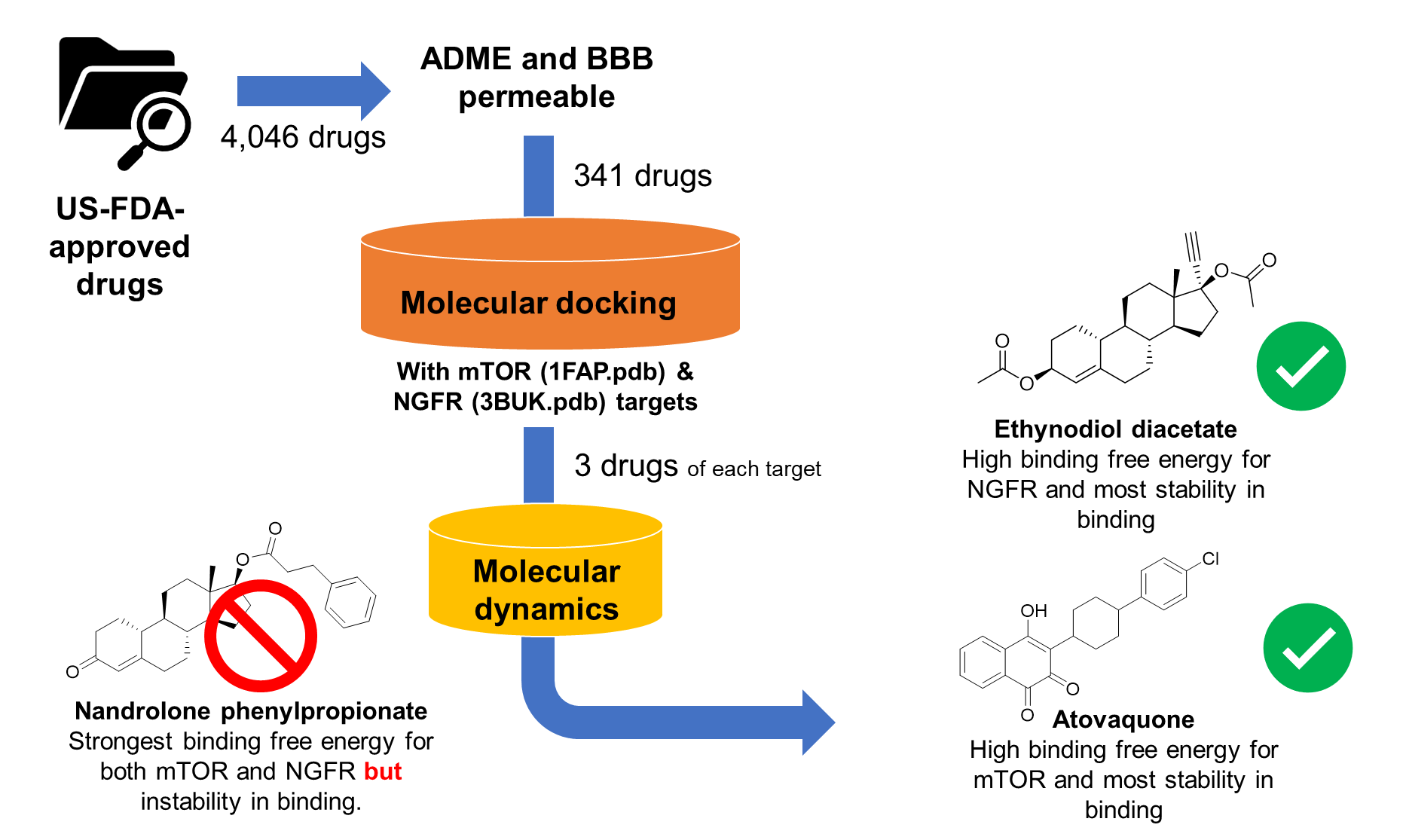
Alzheimer's disease (AD) remains a significant unmet medical challenge. This study investigates the repurposing of FDA-approved drugs for AD using computational methods. From 4,046 screened drugs, 341 candidates were retained based on pharmacokinetic criteria, including blood–brain barrier permeability and gastrointestinal absorption. Molecular docking identified nandrolone phenylpropionate, atovaquone, and cholecalciferol as top candidates for mTOR, and nandrolone phenylpropionate, ethynodiol diacetate, and drospirenone for p75 neurotrophin receptor (p75NTR). Molecular dynamics simulations assessed the stability of these protein-ligand complexes, revealing that atovaquone and ethynodiol diacetate exhibited the highest stability with mTOR and p75NTR, respectively. Despite the promising binding properties of steroid-based drugs, their systemic side effects necessitate further structural modifications. This study demonstrates the feasibility of drug repurposing for AD and underscores the importance of computational approaches in accelerating the discovery of new therapeutic options.Downloads
Download data is not yet available.
Downloads
Published
2026-01-05
How to Cite
Anukanon, S., Teerapatarakan, N., & Hankitichai, P. (2026). Computational Analysis of FDA-Approved Drugs for Potential Repurposing in Alzheimer’s Disease: Targeting mTOR and NGFR Pathways. Science Essence Journal, 42(1), 50–70. https://doi.org/10.69523/sej.2026.42.17130
Issue
Section
Research Article