Pinocembrin Suppresses Leukemic Cell Growth through CDK4 Downregulation and Caspase-8 Activation
DOI:
https://doi.org/10.69523/sej.2026.42.17378Keywords:
Pinocembrin, Leukemic T cells, Extrinsic apoptosis, Caspase-8, Cell proliferation, Antileukemic activityAbstract
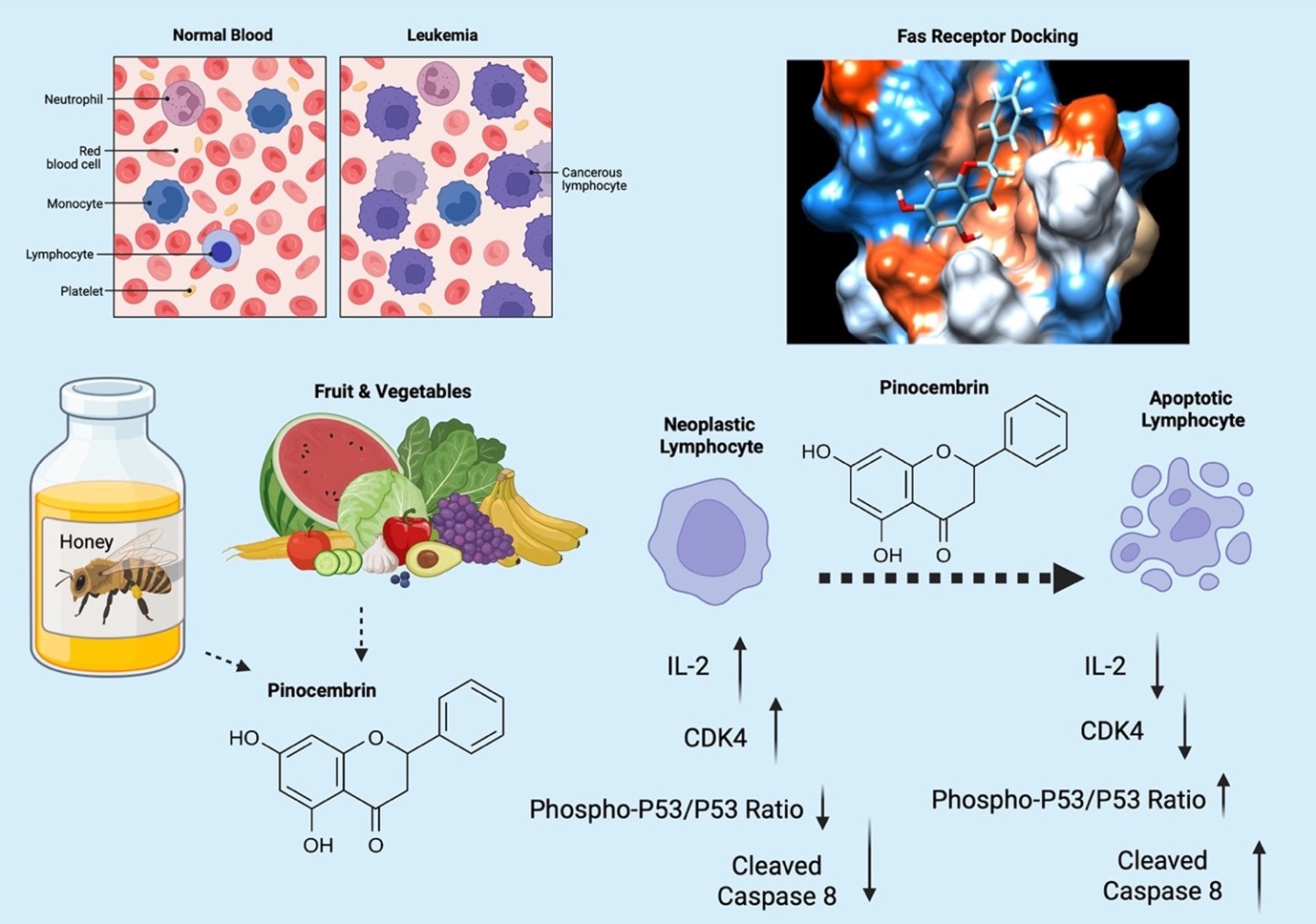
Acute lymphoblastic leukemia (ALL) is a blood cancer that arises from immature lymphoid progenitor cells. Current treatments often cause significant toxicity and long-term side effects. Pinocembrin, a natural flavanone found in plants and honey, has shown anticancer effects in various experimental models, but its impact on leukemic cells remains incompletely understood. This study investigated the antileukemic properties of pinocembrin and its potential mechanisms of action in the Jurkat and K562 cell lines. Viability of Jurkat and K562 cells was assessed using the trypan blue exclusion and XTT assays. Cell cycle and apoptotic activity were analyzed by flow cytometry. Interleukin-2 secretion was evaluated by ELISA, and protein expression was analyzed by Western blotting. Molecular docking was performed to explore potential protein–ligand interactions. Pinocembrin decreased cell viability in both leukemic cell lines, with effects depending on time and concentration; IC50 values were 175 µM for Jurkat cells and 122 µM for K562 cells after 48 h. In Jurkat cells, mechanistic studies revealed G0/G1 cell-cycle arrest and reduced CDK4 levels. Additionally, pinocembrin lowered interleukin-2 secretion, increased apoptotic cell populations, and elevated cleaved caspase-8 expression, indicating activation of the extrinsic apoptotic pathway. Molecular docking suggested a possible interaction with the Fas receptor. Collectively, these findings suggest that pinocembrin prevents growth and induces pro-apoptotic effects in leukemic cells in vitro. Further in vivo validation and pharmacological optimization are required to determine its therapeutic potential in ALL.Downloads
Download data is not yet available.
Downloads
Additional Files
Published
2026-08-18
How to Cite
Kawthawee, N. ., & Brimson, S. (2026). Pinocembrin Suppresses Leukemic Cell Growth through CDK4 Downregulation and Caspase-8 Activation. Science Essence Journal, 42(2), 222–240. https://doi.org/10.69523/sej.2026.42.17378
Issue
Section
Research Article